

Due to current drought conditions many canals and rivers are suffering from low water levels. Some canals are subject to temporary restrictions or closures to protect water supplies or because navigation is not possible. Check the CRT list of Notices and Stoppages at https://canalrivertrust.org.uk/notices. You can select to filter the listings by Low Water Levels.
The Montgomery Canal
The Montgomery canal as it is known today runs for 38 miles from a junction with the Llangollen Canal near Ellesmere in Shropshire to Newtown in Montgomeryshire, now part of Powys. Unfortunately it is not possible to navigate the full length and some sections are not in water, others are isolated. The navigable short section to Gronwen Wharf is well worth cruising. The whole route is quiet and rural, and because access to the canal is controlled by the lock keeper at Welsh Frankton there are a limited number of boats on the length.
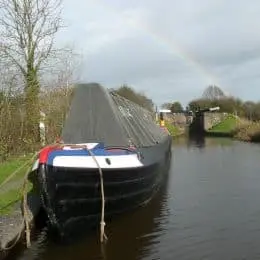
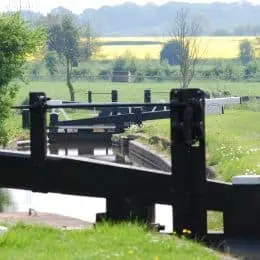
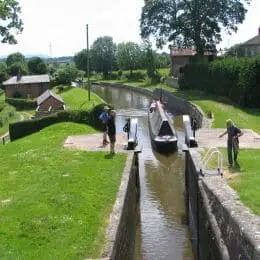
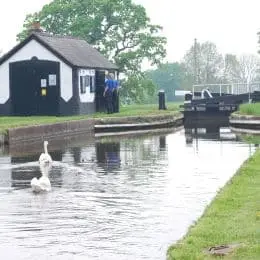
Feature Spot – Frankton Locks
The Monty leaves the Llangollen Canal at Frankton locks, open for a just few hours each day and passage must be booked in advance with CRT. Below the four locks, two in a staircase, the canal takes a sharp right turn. On the left is the intended line to Shrewsbury which was never built, but there are useful moorings and facilities. The shallow Graham Palmer lock follows immediately, dropping the level just a few inches. This was built during restoration to reduce the height that the canal banks had to be built up due to subsidence on the length to Aston. The canal for much of this length is on an embankment because the surrounding land has subsided due to drainage pumping, the cause of a breach in the 1940’s.
At Rednal there’s one of the Shropshire Union Company (SUC) warehouses common on these canals. General cargo of all sorts was carried by the company, some of it in their famous ‘fly’ boats which operated as a regular timed ‘next-day’ delivery service until 1920. Some of the small warehouses for this traffic still remain in existence, the tiny half timbered one at Rednal still has pull-out stop and go boards that told the fly boat captain whether there was a collection to be made that day. There are also the remains of an interchange basin where goods could be transferred between boats and railway wagons.
The canal was taken over by the London and North Western Railway in 1846 who then found themselves with a canal network probing deep into the territory of their main railway rival, the Great Western. It seems to have suited them to keep an efficient canal operation running almost to spite the GWR. Under the LNWR and their successor, the LMS, the Montgomery Canal in all its parts continued to operate for nearly 100 years.


ON THIS CANAL…
The current state of restoration (2023)
Frankton to Queens Head – reopened in 1996 – 4 miles
Queens Head/Aston Locks to Gronwen – reopened 2003 – 3 miles
Gronwen to Crickheath Basin – hoped to be reopened 2023 – 1 mile
Crickheath Basin to Llanymynech -restoration ongoing – 2 miles
Llanymynech to Arddleen – levelling up grant allocated – 4 miles
Arddleen to Burgedin reopened 2000 – 1 mile
Burgedin to Welshpool reopened 1992 – 5 miles
Welshpool to Berriew reopened 1996 – 5 miles
Berriew to Newtown – awaiting restoration (Newhouse locks restored 2006) – 8 miles
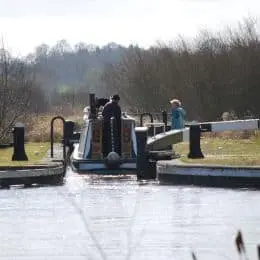
The two Aston locks were designated a Site of Special Scientific Interest (SSSI) in 1986 because of the rare species found there. IWA’s Waterway Recovery Group created offline nature reserves to offset the value of the canal’s SSSI and allow restoration of the main route to go ahead. Two large new ponds were added in 2018 with National Lottery funding. The Aston nature reserve has trails, hides and information boards, well worth a visit.
Gronwen is the current limit of navigation but it is hoped to soon be reopened a further mile to Crickheath Basin, where boats can turn. The dropped Schoolhouse Bridge is currently being rebuilt. Additional nature reserve provision at Aston is needed to support the rest of the canal in Shropshire, plus dredging to improve the water quality for water plants and navigation. Then two miles of derelict canal remain to be restored to reach Llanymynech; funding must still be found for most of this work. Linking to the 4 mile length of canal around Llanymynnech could add a total of 7 miles, doubling the currently cruisable length, providing that that 4 mile Llanymynech section could be made navigable.
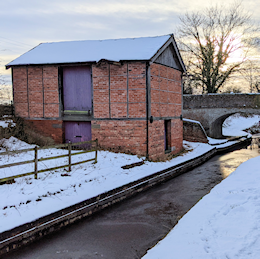
In 2021 £13.9M was awarded from the Government ‘Levelling Up Fund’ for a new phase of the restoration which aims to restore the channel of a 4 mile section of the canal between Llanymynech and Arddleen, which has not been navigable since the 1930s, so that ‘navigation will eventually be possible’. Some of this money will go on a ‘carefully tailored’ dredging programme south from Llanymynech to ensure the supply of water for boats and for wildlife. Three more off-line water-based nature reserves will be created alongside the canal to protect the canal’s natural standing as a SSSI, in line with an agreed Conservation Management Plan to increase water traffic. Work will also include the development of a community cultural hub on the canal at Welshpool Wharf using historic canal-side buildings. It will see the re-building of two bridges on side roads near Llanymynech which where were demolished and the roads dropped to canal level. However this work will not be enough to enable the 4 mile Llanymynech section to connect to the adjacent in-water Welshpool section because of blockages around Arddleen where 2 bridges on the main A483 road were dropped to canal level soon after the canal’s closure.
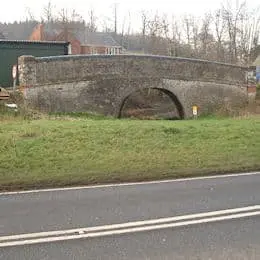
These crossings create much more significant problems in terms of cost and complexity, although the engineering options are being considered. The Welshpool section itself, although in water for over 20 years, needs dredging and weed removal, issues which currently impede boating for the few boats on that section. The Heulwen Trust run day trips along free for disabled groups on weekdays.
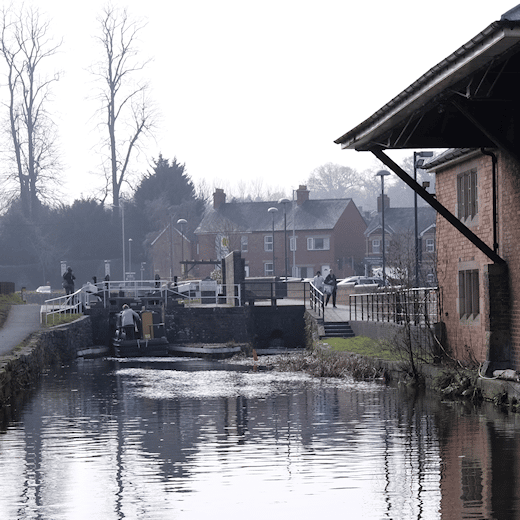
South of Welshpool there is still a further unrestored 8 miles from Berriew to Newtown, the last 3 miles of which have been completely lost or built over. Full restoration is still a long way off.
Newtown. However towpaths are open to walkers all the way through to Newtown.
Shropshire Union Canal Society
The Shropshire Union Canal Society is organising working parties as the restoration continues on the Montgomery Canal. They need extra volunteer help, all you need to be able to do is lift a shovel! Details on the SUCS website.

All materials and images © Canal Junction Ltd. Dalton House, 35 Chester St, Wrexham LL13 8AH. No unauthorised reproduction.
About
| Terms
| Privacy |
Returns |
Sitemap
| Contact Us
Web Hosting & Development
With over 800 pages, this website uses cookies to record visitor behaviour using Google Analytics. More information on Privacy Page. Page last updated: 24/10/2026.
Back to Menu....
Canal Maps & Guides >>